
Lithium batteries have become the talk of every dock in the Florida Keys. And for good reason. They're lighter, last longer, charge faster, and provide more usable capacity than traditional lead-acid batteries. But they're also more expensive upfront, and the total cost of a proper installation catches many boat owners off guard.
After helping dozens of Florida Keys boaters make the switch over the past few years, I want to give you a realistic picture of what a lithium upgrade actually costs and whether it makes financial sense for your situation.
Understanding the True Cost
The battery itself is only part of the expense. A proper lithium installation often requires changes to your charging system, and cutting corners on these components leads to premature battery failure or safety issues.
Here's a breakdown of what a typical lithium upgrade involves:
Battery Costs
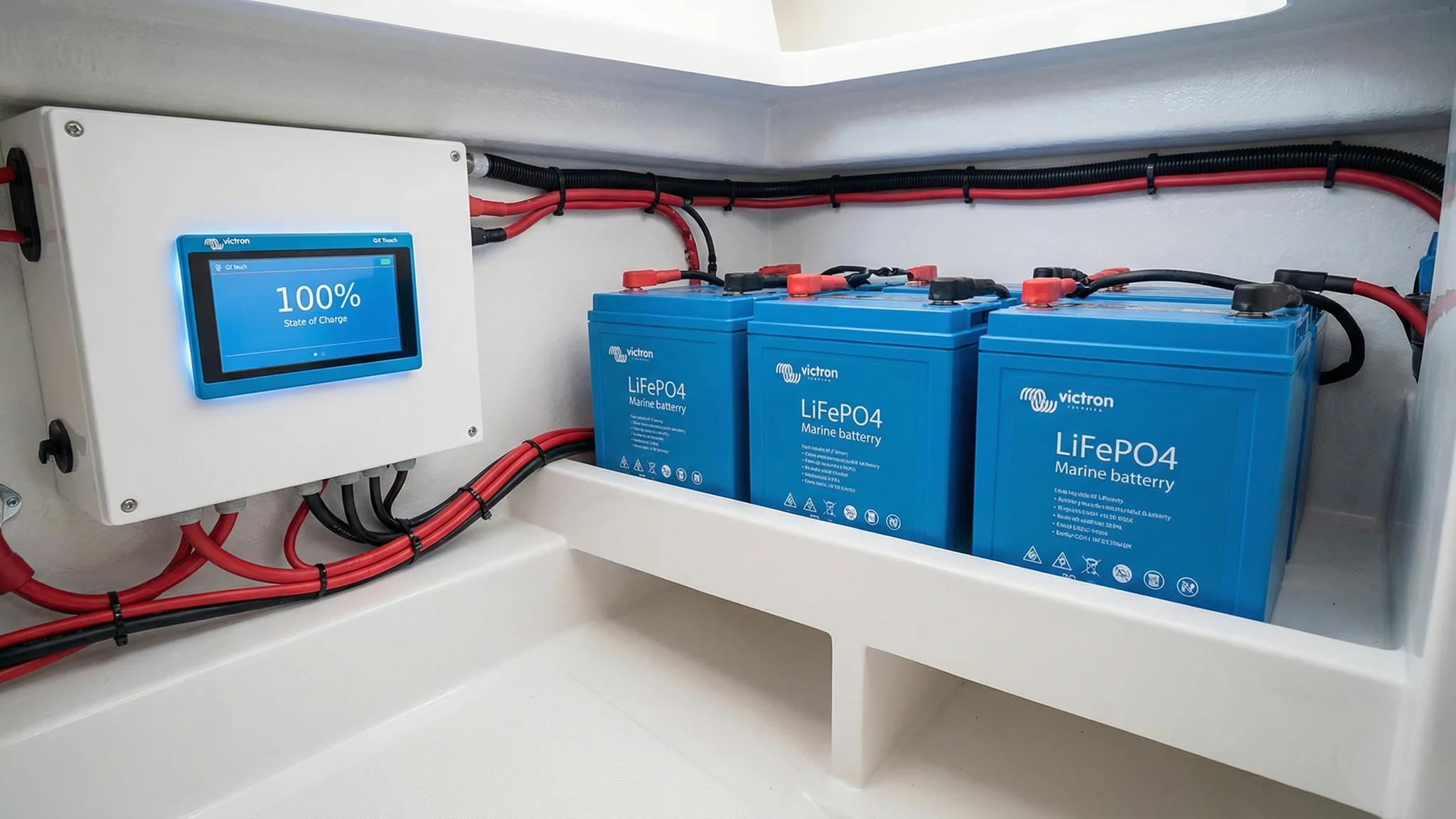
Lithium iron phosphate (LiFePO4) marine batteries range widely in price depending on brand, capacity, and features. For the Florida Keys boating community, I typically recommend batteries with built-in battery management systems (BMS) and Bluetooth monitoring.
House bank replacement (200-400Ah capacity):
Budget options (Ampere Time, Renogy): $800-1,500
Mid-range options (Battle Born, SOK): $1,500-3,000
Premium options (Victron, RELiON): $2,500-5,000
Starting battery (if replacing):
Most boaters keep their AGM starting battery
Lithium starting batteries: $300-800
Charging System Modifications
This is where many boat owners get surprised. Your existing charging system was designed for lead-acid chemistry. Connecting lithium batteries to a lead-acid charger works in some cases but often causes problems.
Shore power charger replacement or reprogramming:
Many modern chargers have lithium settings: $0 (just reprogram)
New lithium-compatible charger: $300-800
High-output multi-bank charger: $600-1,500
Alternator considerations:
Lithium batteries accept charge at very high rates
Stock alternators can overheat when connected directly to lithium
External alternator regulator: $300-500
Alternator replacement (if undersized): $400-800
Alternator temperature sensor: $50-100
Solar charge controller (if applicable):
Must be lithium-compatible
Quality MPPT controller: $150-500
Additional Components
Battery monitor (highly recommended):
Victron BMV series: $200-400
Simarine Pico: $300-500
Basic shunt monitor: $100-200
Battery disconnect with proper rating:
Lithium-rated disconnect switch: $50-150
Wiring upgrades (if needed):
Larger cables for high discharge rates: $50-200
New terminal connections: $25-100
DC-DC charger (for alternator protection):
Allows safe charging from alternator: $300-600
Total Project Costs
Based on installations I've completed in the Florida Keys, here are realistic total costs for different scenarios:
Basic Upgrade (Weekend Cruiser)
Replacing 2-3 Group 27 batteries with a single 200Ah lithium, existing charger compatible:
Materials: $1,200-2,000
Labor: $400-800
Total: $1,600-2,800
Standard Upgrade (Active Cruiser)
Replacing house bank with 300-400Ah lithium, new charger, alternator protection:
Materials: $2,500-4,500
Labor: $800-1,500
Total: $3,300-6,000
Premium Upgrade (Liveaboard or Extended Cruiser)
Complete system redesign with large lithium bank, inverter integration, solar:
Materials: $5,000-10,000
Labor: $1,500-3,000
Total: $6,500-13,000
Does Lithium Make Financial Sense?
This is the question I get most often. The answer depends on how you use your boat.
Lithium Probably Makes Sense If:
You're a liveaboard or extended cruiser. The daily cycling of batteries for refrigeration, lights, and electronics is exactly where lithium excels. A quality lithium bank can handle 3,000-5,000 charge cycles compared to 500-1,000 for lead-acid. Over 5-10 years, you'll replace lead-acid batteries multiple times.
Weight matters on your boat. A 400Ah lithium bank weighs about 120 pounds. An equivalent lead-acid bank weighs 350+ pounds. On smaller boats, this weight difference affects performance noticeably.
You discharge deeply and frequently. Lithium provides 80-100% of rated capacity safely. Lead-acid batteries should only be discharged to 50% to maintain longevity. This means a 200Ah lithium effectively replaces a 400Ah lead-acid bank.
You want faster charging. Lithium batteries can accept charge at much higher rates. What takes 8 hours with lead-acid might take 2 hours with lithium.
Lithium Might Not Make Sense If:
Your boat sits at the dock most of the time. If you're only boating a few weekends per month and staying connected to shore power, the extended cycle life of lithium won't be utilized.
Your current batteries are working fine. There's no urgency to switch. Let your current lead-acid batteries reach end of life before investing.
Budget is extremely tight. While lithium saves money long-term, the upfront cost is significant. A well-maintained AGM system still works perfectly fine for many boaters.
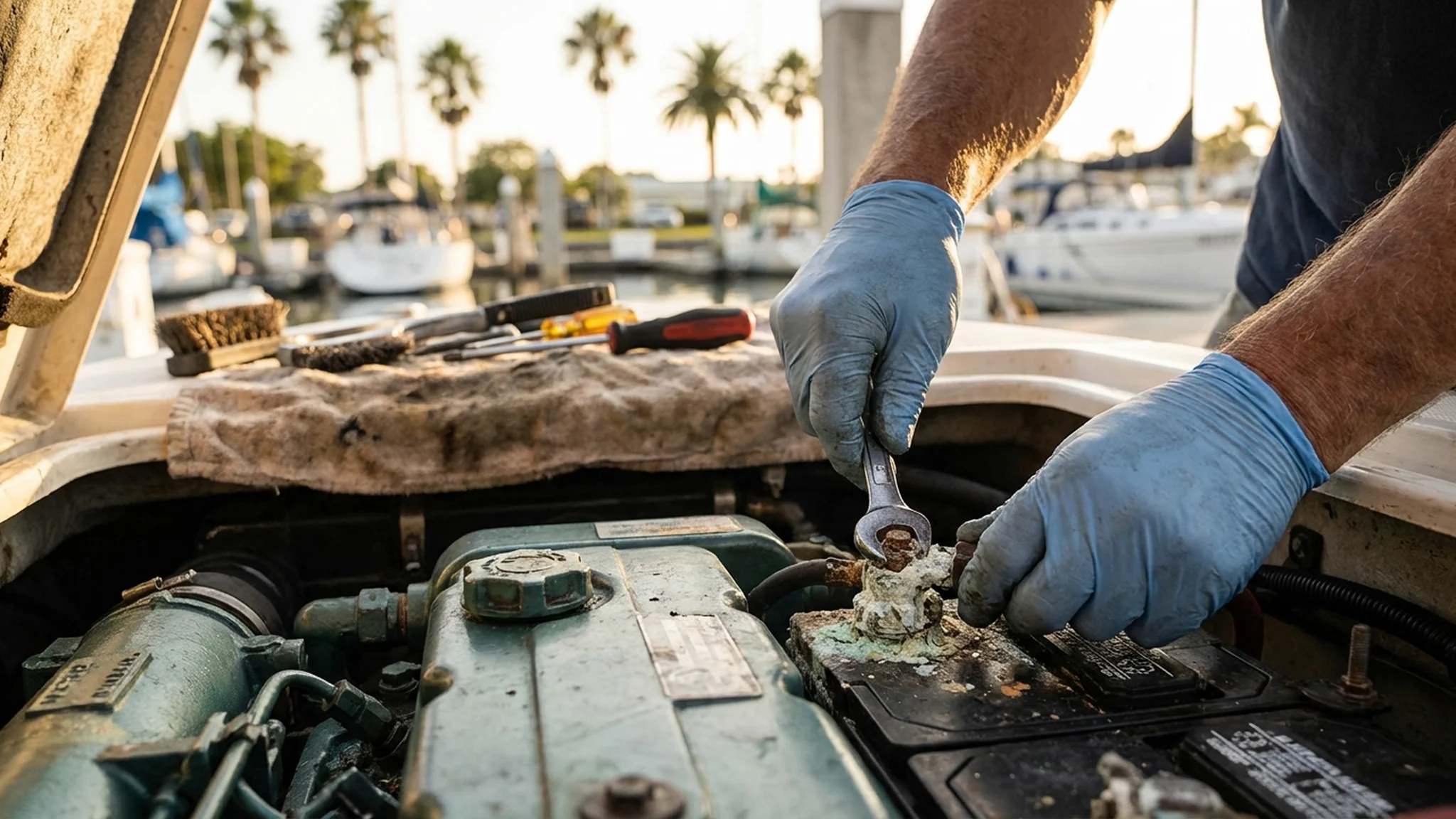
Your boat is older with many electrical issues. Fix the underlying problems first. Lithium won't solve corroded connections, voltage drop issues, or undersized wiring.
Important Installation Considerations
Battery Management System (BMS)
Never install lithium batteries without a properly functioning BMS. The BMS protects against:
Overcharging (cell damage, fire risk)
Over-discharging (cell damage)
Over-temperature conditions
Cell imbalance
All quality marine lithium batteries have internal BMS. External BMS systems are used for DIY cell builds but require expert installation.
Cold Weather Performance
Lithium batteries cannot be charged below freezing temperatures without risk of permanent damage. Most internal BMS systems prevent charging below 32°F. In the Florida Keys, this is rarely a concern, but if you plan to take your boat north in winter, consider batteries with internal heating elements.
Paralleling Batteries
Connecting multiple lithium batteries in parallel requires matching batteries of the same brand, capacity, and age. Mixed batteries can cause balancing issues and premature failure.
Insurance Considerations
Check with your marine insurance provider before installing lithium batteries. Most insurers accept lithium installations that follow ABYC guidelines, but some require notification or have specific requirements.
Making the Decision
My recommendation for most Florida Keys boaters is to evaluate your actual usage patterns before committing to lithium. If you're not sure, start by installing a battery monitor on your current system. Track your daily amp-hour usage for a few months. This data makes sizing a lithium system much more accurate and helps justify the investment.
When you're ready to make the switch, a professional installation ensures your charging system is properly configured and all safety considerations are addressed. The money saved by doing it yourself often gets spent fixing problems later.
Lithium technology is mature and reliable when installed correctly. For active boaters in the Florida Keys, the benefits of lighter weight, longer life, and more usable capacity make a compelling case. Just go in with realistic expectations about total project costs, and you won't have any surprises.